Amalgama: Practical AI Automation That Fits Real Business Workflows
Most companies do not need another experimental chatbot. They need systems that quietly handle repetitive work, surface reliable information, and keep operations moving. That is the space where Amalgama operates: designing, testing, and implementing practical AI workflow automation for operations, research, support, sales, and internal knowledge. Instead of chasing hype, the team focuses on automation that actually fits the way a business already runs.
The promise sounds simple, but the execution is where most AI projects fail. A model that performs well in a demo can collapse when it meets messy data, inconsistent processes, and real customer expectations. Amalgama approaches this challenge by treating AI as an operational layer rather than a standalone product.
Why Generic AI Tools Rarely Fit Real Operations
Off-the-shelf AI products are built for broad audiences. They handle general questions, generate text, and summarize documents. The trouble starts when a business needs a specific decision made consistently across thousands of records, or when a support team needs answers that respect internal policies and product nuances.
A generic tool does not know your escalation rules, your tone of voice, or the difference between a refund request and a billing question. It also does not know which internal documents are authoritative and which are outdated. That gap between general capability and specific reliability is exactly what a focused ai consulting services engagement is meant to close.
Amalgama’s approach starts with the workflow, not the model. The team maps how work actually moves through an organization, identifies the friction points, and then decides where automation adds value. Sometimes the answer is a language model. Sometimes it is a rules engine, a retrieval system, or a simple integration. The goal is a working system, not a fashionable one.
From Workflow Trace to Working System
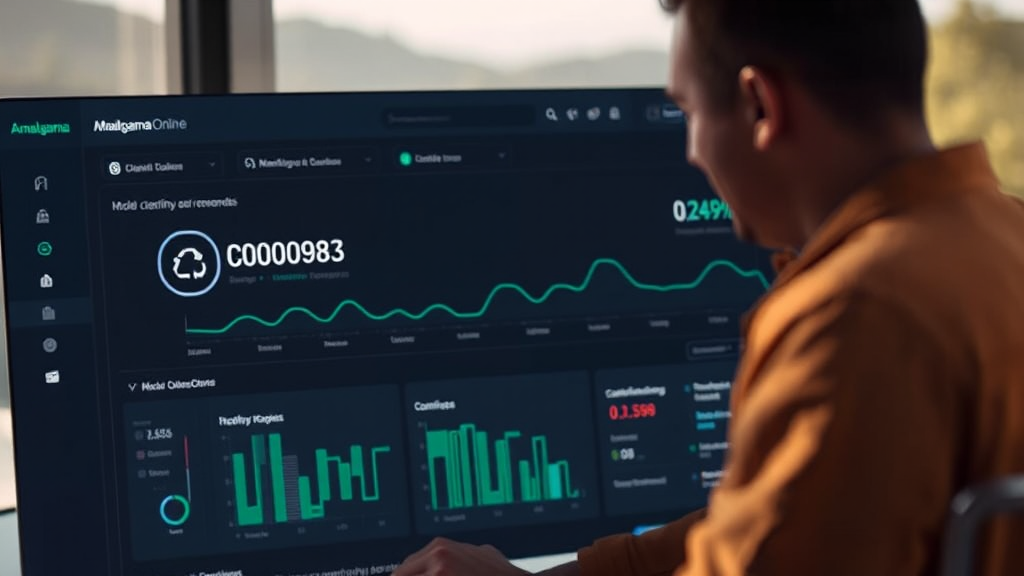
One of the more useful ideas in Amalgama’s process is the workflow trace: a clear record of how a task moves from input to output. In a typical engagement, that trace might look like an intake step, a classification step, a confidence check, and a final action. Each stage can be measured, tested, and improved.
For example, a support operation might receive thousands of messages per week. A workflow trace would show how those messages are categorized, which ones need human review, and how quickly they are resolved. Once that trace exists, automation can be inserted at the points where it reduces effort without reducing quality.
This is where ai business consulting becomes practical rather than theoretical. The output is not a slide deck about the future of AI. It is a functioning pipeline that classifies, routes, drafts, retrieves, or summarizes work at a scale humans cannot match manually. The system is designed to be observed, corrected, and extended over time.
Where AI Automation Creates the Most Value
Amalgama highlights several areas where automation tends to pay off quickly: operations, research, support, sales, and internal knowledge. Each has a different texture, but they share a common pattern: repetitive decisions that depend on information scattered across systems.
In operations, automation can handle intake, triage, and status updates. In research, it can gather, deduplicate, and summarize findings. In support, it can draft responses, detect intent, and escalate edge cases. In sales, it can qualify leads and prepare context before a call. In internal knowledge, it can answer policy questions and point employees to the right document.
None of these use cases require a fully autonomous agent. They require a reliable assistant that knows its limits and hands off gracefully. That is a design choice, and it is one that separates durable automation from fragile experiments.
Testing and Confidence: The Part Most Teams Skip
A confidence score is only useful if it is calibrated. A model that says 0.987 but is wrong half the time is worse than no model at all. Amalgama’s emphasis on simulation and live testing suggests a discipline that many AI projects lack: measuring accuracy before scaling.
In practice, this means running historical data through the system, comparing outputs against known outcomes, and setting thresholds for human review. If the system is unsure, it should say so. If the system is wrong, the error should be traceable. This is the unglamorous work that makes automation trustworthy.
It also connects to a broader theme in ai management consulting: automation is not just a technical project. It changes roles, workflows, and accountability. Leaders need to know where the system is making decisions, how those decisions are audited, and what happens when something goes wrong. A good implementation plan addresses all three.
Build, Measure, Improve: A Realistic Lifecycle
AI systems drift. Data changes, customer behavior shifts, and edge cases multiply. A workflow that works in January may need adjustment by June. Amalgama’s process appears to account for this by treating automation as a lifecycle rather than a one-time delivery.
The lifecycle usually looks like this: assess the workflow, design the automation, test it against real data, deploy it with monitoring, and iterate based on performance. Each stage has clear outputs. The assessment identifies opportunities. The design specifies inputs, outputs, and failure modes. The test validates accuracy. The deployment includes guardrails. The iteration keeps the system aligned with reality.
This is slower than buying a tool and hoping for the best, but it is faster than rebuilding a failed project six months later. It also produces something valuable along the way: documentation of how the business actually works.
Keeping Up With AI Without Chasing Noise
The AI landscape changes weekly. New models, new frameworks, new claims. For most businesses, the challenge is not access to information but filtering it. Following ai news can be useful, but only if it connects to decisions you actually need to make.
A practical filter is to ask three questions: Does this change what is possible in my workflow? Does it reduce cost or risk? Can I test it without disrupting operations? If the answer to all three is no, the news can wait. If the answer is yes, it becomes a candidate for a small, contained experiment.
Amalgama’s positioning suggests this kind of pragmatism. The brand is not selling a single model or a magic platform. It is offering a way to evaluate, design, and implement automation that fits a specific business context. That is a more durable value proposition than any individual tool.
What a Good AI Engagement Looks Like
A well-run engagement starts with a clear problem statement. Not “we need AI,” but “we need to reduce response time on support tickets by 30 percent without lowering satisfaction.” That kind of goal can be measured, tested, and improved.
From there, the work moves through discovery, design, and implementation. Discovery maps the current state. Design proposes a target state with specific automation points. Implementation builds and tests the system. Throughout, there should be transparency about what the system can and cannot do.
The best outcomes are often modest and compounding: a 20 percent reduction in manual triage, a faster research cycle, fewer escalations, more consistent answers. These gains add up. They also build organizational confidence, which makes the next automation project easier.
Common Mistakes to Avoid
The first mistake is starting with the tool instead of the workflow. The second is skipping measurement. The third is assuming that a model’s output is a decision. A model produces a suggestion; a workflow produces a decision with accountability.
Another common error is automating a broken process. If the underlying workflow is inconsistent, automation will only make the inconsistency faster. It is better to simplify first, then automate.
Finally, teams often underestimate the human side. People need to understand what the system does, when to trust it, and how to correct it. Training and clear escalation paths are not optional; they are part of the implementation.
FAQ About Amalgama and AI Workflow Automation
What does Amalgama actually do?
Amalgama designs, tests, and implements practical AI workflow automation for operations, research, support, sales, and internal knowledge. The focus is on systems that fit real business processes rather than generic AI tools.
Is AI automation only for large companies?
No. Smaller teams often benefit more because automation frees up limited human attention. The key is choosing a contained workflow with clear inputs and outputs, then expanding from there.
How do you measure whether automation is working?
You measure it against the original problem: response time, accuracy, cost per task, escalation rate, or satisfaction. If the numbers do not improve, the system needs adjustment or removal.
What is the biggest risk in AI automation projects?
The biggest risk is deploying a system that is confidently wrong. That is why testing, confidence thresholds, human review, and traceability matter more than raw model capability.
How does Amalgama keep up with rapid AI changes?
By filtering new developments through practical questions: does this change what is possible, reduce cost or risk, and can it be tested safely? Only then does it become part of the roadmap.
Conclusion: Automation That Earns Its Place
The most valuable AI systems are not the most impressive ones. They are the ones that quietly reduce effort, improve consistency, and earn trust over time. Amalgama’s approach reflects that reality by starting with workflows, testing against real data, and implementing automation where it actually fits.
For businesses tired of hype and looking for something that works, that is a sensible place to start. The goal is not to replace people. It is to give them better tools for the work that matters.