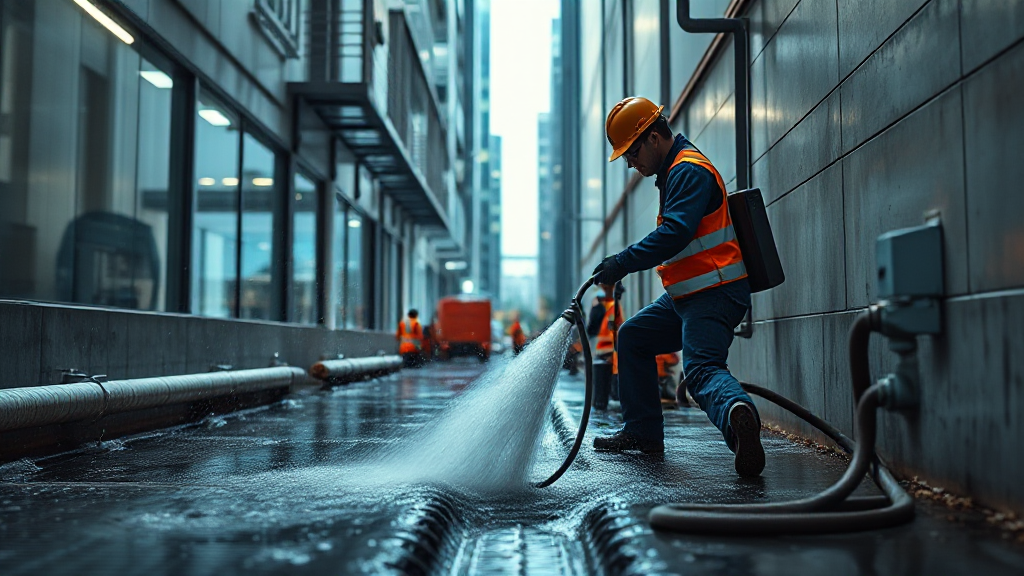
A Síndico’s Framework for Drain Maintenance in Diadema Buildings
The assembly is voting on the annual budget, and someone points at the line for drain and sewer maintenance: “Why are we paying this every year if nothing is broken?” As the síndico, you have about ninety seconds to answer before the room decides the item is waste. The framework below is what turns that moment around. It shows how to document the building’s drain history, translate risk into a number the assembly can approve, and schedule the work so the question stops coming back.
Diadema’s building stock is dense, aging in parts, and connected to a municipal network that does not always behave predictably after heavy rain. A condominium that treats drains as an emergency-only expense will eventually pay for a flooded garage, a damaged elevator shaft, or an insurance dispute. The same building, managed with records and a calendar, can usually justify a smaller preventive budget than the reactive one it has been absorbing quietly. Companies such as desentupidora Mauá SP work across the region and can support both the documentation and the scheduled execution, which matters when you need a paper trail for the assembly.
Start With Documentation the Assembly Cannot Argue With
Governance begins with evidence. Before you propose any spending, build a drain file that any owner can open and understand. It does not need to be elaborate: a spreadsheet plus a folder of service reports and photos is enough, as long as it is consistent and dated.
What belongs in the building’s drain file
- An inventory of every drain point: garage floor drains, area drains, kitchen and laundry stacks, storm inlets, grease traps, and the septic or holding tank if the building has one.
- A short history per point: last cleaning date, method used, blockages reported, and any recurring pattern such as the same stack backing up every rainy season.
- Service reports and photos from each intervention, including before-and-after images of the line and the equipment used.
- Incident log: date, location, cause if known, cost, and whether it was preventive or emergency.
The point of this file is not bureaucracy. It converts vague complaints (“the garage smells again”) into a measurable pattern the assembly can see. When three units report the same stack in eighteen months, that is no longer an opinion; it is a documented defect with a cost curve.
How to collect the first version quickly
If no file exists, start with a walk-through. Ask the maintenance team or the cleaning contractor to mark every drain on a floor plan, then request the last twelve months of invoices from any drain-related service. Even partial records reveal which areas have been absorbing money. From there, a single inspection visit can fill the gaps and give you a baseline for the coming fiscal year.
Translate Drain Risk Into Budget Language
Assemblies approve numbers, not adjectives. “The drains are old” loses to “we spent R$ X on three emergency calls last year, and a preventive program costs less than one of them.” Your job is to make that comparison explicit.
The three cost buckets to present
- Reactive spending: emergency call-outs, water damage repair, replacement of damaged finishes, and any insurance deductible triggered by a backup.
- Preventive spending: scheduled jetting, drain cleaning, grease trap service, and tank pumping at a defined frequency.
- Deferred risk: the cost you are not paying now but will pay later if a line collapses or a garage floods, including disruption to residents and possible liability claims.
Present all three in one table. Owners who see that preventive service is a fraction of the reactive total usually stop treating the line item as optional. If your building has never tracked reactive costs, reconstruct them from invoices and condominium meeting minutes; the number is almost always larger than the assembly expects.
Benchmarking against similar buildings
It helps to know what comparable buildings in the region spend. Administrators of nearby condominiums are often willing to share frequency, not prices, and a local desentupidora Mauá can tell you what a typical schedule looks like for a building of your size and use. Use that as a sanity check, not as a substitute for your own records.
Build a Fiscal-Year Maintenance Calendar
A drain program that is not on the calendar becomes an emergency by default. The calendar is where governance turns into operations, and it is also the document that answers “why now?” in the next assembly.
A practical annual sequence
- Start of the fiscal year: review the drain file, confirm the inventory, and set the frequency for each line type.
- Dry-season window: schedule jetting and root removal on storm lines and garage drains before the rainy months, when access is easier and failures are less likely to coincide with peak demand.
- Mid-year: service grease traps and kitchen stacks, inspect the tank, and review incident logs for early warning signs.
- Pre-rain check: verify storm inlets, sumps, and pumps, and confirm that emergency contacts are current.
- Year-end: consolidate reports, compare actual spending with the approved budget, and prepare the next proposal.
Frequency should follow use, not habit. A building with a restaurant on the ground floor needs different intervals from a residential tower with no commercial kitchen. Write the reasoning next to each interval in the calendar so a future síndico can defend it without starting over.
Choosing and briefing the provider
Select a provider that can deliver documented service, not just a cleared line. Ask for reports with photos, a description of the method (for example, hydro jetting versus cable cleaning), and a recommendation for the next interval. A desentupidora em Mauá SP that serves condominiums regularly will already work this way and can adapt the schedule to your calendar rather than its own.
Emergency Response: The Part of the Budget Owners Forget
Even a well-managed building needs an emergency plan, because drains fail at the worst possible time. The plan is not a phone number on a wall; it is a short protocol that limits damage and preserves the evidence you will need later.
What the protocol should cover
- Who is authorized to call for emergency service, and at what threshold.
- Which areas to isolate first (garage, elevator pit, electrical rooms) and who has keys.
- How to document the incident before cleanup: photos, time, location, and affected units.
- How the service report and invoice will be filed into the drain record.
Review this protocol once a year with the maintenance team and the concierge staff. The most common governance failure is not a lack of budget; it is a delay of two hours while everyone waits for someone to decide who can authorize the call.
Reporting Back: Turning Maintenance Into Assembly-Ready Evidence
The assembly that questioned the budget last year will question it again unless you close the loop. A one-page annual report does more for future approvals than any speech.
What the annual report should show
| Item | What to present |
|---|---|
| Work completed | Lines serviced, methods used, dates, and provider reports attached. |
| Incidents | Number and cost of emergencies, compared with the previous year. |
| Spending | Approved budget versus actual, with a short explanation of variances. |
| Next year | Recommended frequency changes and the reasoning behind them. |
Keep the language plain and avoid technical jargon where a simple description works. Owners approve what they understand, and they understand patterns, costs, and outcomes. If a line was cleaned twice instead of once, say why; the explanation builds credibility for the next request.
Handling pushback without losing the room
When an owner argues that the building is “fine” because nothing flooded, point to the incident log and the reactive spending, not to opinion. If the records show a quiet year, that is evidence the program is working, not evidence it is unnecessary. Offer to review the frequency at the next assembly rather than defending it as permanent; that concession usually ends the debate.
Frequently Asked Questions From Condominium Administrators
How often should a Diadema building schedule preventive drain service?
There is no single interval. Garage and storm lines are usually serviced before the rainy season, kitchen and grease lines more often in buildings with commercial units, and tanks according to their measured fill. The right answer comes from your own incident log plus a provider’s inspection, not from a generic rule.
Can a síndico approve emergency drain work without an assembly vote?
In most condominiums, urgent work that prevents damage can be authorized under the síndico’s emergency powers, subject to the convention and internal rules. Document the decision, the reason, and the cost, and report it at the next assembly. The key is that the authorization is recorded, not that it was avoided.
What documents should I keep after each service visit?
Keep the service report, the invoice, before-and-after photos, the method used, and any recommendation for the next interval. File them by drain point and date so the pattern is visible. This file is what makes the next budget conversation short.
How do I compare proposals from different providers?
Compare the scope, not just the price: which lines, which method, what documentation is included, and what frequency is recommended. A cheaper proposal that clears a line without reporting on its condition often costs more over a fiscal year. Request the same scope from each provider so the comparison is honest.